


With greenwashing scrutiny rising on both sides of the border, procurement and marketing teams need more than a product's label to make confident sourcing decisions. This guide breaks down the specific materials, certifications, and supplier documentation that distinguish genuinely sustainable branded promotional items from those that simply sound good. Use the checklist to evaluate your next order with confidence.
The word "sustainable" appears on more product pages, pitch decks, and swag catalogues than ever before. And yet, for procurement managers, HR teams, and marketing leads trying to build responsible branded gifting programs, that word alone offers very little useful guidance.
The question buyers actually need answered is more specific: what evidence should I ask for before I approve this order?
With regulators on both sides of the border paying closer attention to environmental claims, and Canada's Competition Act now requiring substantiation for product-level environmental benefit claims, the bar for "sustainable" has moved. A checklist approach replaces vague impressions with verifiable criteria, which is better for your program and better for your compliance exposure.
This post walks through the key evaluation areas, the certifications that carry weight, and the product features that actually reduce environmental impact, so you can make decisions grounded in specifics rather than marketing language.
Why "Eco-Friendly" Is No Longer Enough
Terms like "eco-friendly," "green," and "sustainable" are still widely used in search because that is how buyers look for products. However, from a regulatory and compliance standpoint, these terms carry risk when left unsubstantiated.
Canadian guidance under the Competition Act emphasizes that enforcement looks at the overall impression a claim creates, not just its literal wording. A product described broadly as eco-friendly may create an impression far broader than the narrow fact that supports it, such as a single component containing recycled content.
The practical shift for buyers is this: move away from evaluating how a product is described, and toward evaluating what can be proven about it. The checklist below is built around that principle.
The Sustainable Promotional Products Buyer's Checklist
Use these criteria to evaluate any branded promotional item before it enters your program.
1. Material Composition
Start with what the product is made from. Specific, verifiable material claims are a stronger foundation than broad benefit language.
• Recycled content: Look for a stated percentage (e.g., made from 50% post-consumer recycled plastic) and ask whether that claim is third-party verified under a standard such as the Global Recycled Standard (GRS).
• Organic fibers: For apparel, bags, and textiles, Global Organic Textile Standard (GOTS) certification confirms that organic claims cover both fiber content and the full production chain, including dyeing and finishing.
• Rapidly renewable materials: Bamboo, cork, and similar materials are often positioned as sustainable alternatives. Evaluate durability alongside renewability; a product that lasts ten years is more defensible than one that degrades quickly.
• FSC-certified wood or paper: For notebooks, packaging, and wood-based items, Forest Stewardship Council (FSC) certification confirms responsible forest management with a traceable chain of custody.
2. Third-Party Certifications
Certifications shift environmental claims from assertions to verified facts. Look for recognized standards relevant to the product category.
• GRS (Global Recycled Standard): Verifies recycled content and responsible processing throughout the supply chain. Relevant for bags, bottles, apparel, and accessories.
• GOTS (Global Organic Textile Standard): Covers organic fiber content plus chemical and social criteria in textile production. Relevant for clothing, tote bags, and fabric accessories.
• FSC (Forest Stewardship Council): Covers responsibly managed wood and paper sources with chain of custody tracking.
• OEKO-TEX Standard 100: Tests finished textiles for harmful substances. Relevant for any item worn against skin or used daily.
• Fair Trade: Verifies fair wages and safe conditions in production. Relevant for food items, apparel, and commodity goods.
• Bluesign: Covers resource efficiency and chemical safety in textile manufacturing.
A supplier who cannot identify which certifications apply to a specific SKU, or who cannot provide documentation on request, is a signal to probe further before approving a claim.
3. Supplier Audit Standards
Material certifications tell you about the product. Supplier audit standards tell you about the conditions under which it was made.
• SA8000: A social accountability standard covering labor rights, child labor, health and safety, and management systems. Audited by accredited third parties.
• SMETA (Sedex Members Ethical Trade Audit): A widely used ethical trade audit framework covering labor, health and safety, environment, and business ethics.
• Factory audit documentation: Ask whether audit results are available on request. Legitimate suppliers in the ethical sourcing space should be able to confirm their audit status.
Supplier transparency about audit results is a meaningful differentiator. It does not guarantee a perfect supply chain, but it does indicate a shared commitment to accountability.
4. Durability and Use Life
A product's environmental impact is partly determined by how long it is used. A well-constructed reusable water bottle replaces hundreds of single-use containers over its lifespan. A cheaply made item that breaks after one use produces impact without delivering value.
• Ask whether the product is built for repeated, long-term use.
• Consider the context of use: a conference giveaway has a different use-life expectancy than an onboarding gift.
• Higher quality items at a slightly higher unit cost can be more defensible from both an environmental and a brand perspective.
5. End-of-Life Options
Where does the product go when the recipient no longer needs it? This is an area where many suppliers have limited information, but it is worth evaluating.
• Recyclability: Is the material stream accepted in standard municipal recycling?Composite or mixed-material products are often harder to recycle than single-material items.
• Compostability claims: These require specific conditions to be meaningful. A product labeled compostable may only break down in industrial composting facilities, not in a home composter or landfill. Ask for specifics before amplifying the claim.
• Repairability: For higher-value items like bags or tech accessories, products that can be repaired rather than replaced extend use life.
6. Packaging
Do not evaluate the product in isolation. Packaging adds material footprint and is often the first thing a recipient discards.
Look for FSC-certified or recycled-content paper and cardboard packaging.
Ask whether plastic overwrap is necessary, or whether a biodegradable plastic or paper alternative is available.
For gifting programs, evaluate whether packaging can be reused, repurposed, or easily recycled.
Branded Promotional Items That Meet the Checklist
Applying this checklist is most useful when you have specific products to evaluate. Below are a few examples from Ethical Swag's catalog that hold up well against these criteria, with the specific attributes that support each one.
The Amelia Hard Bound Notebook
A soft-touch, hard-cover journal with a built-in elastic closure, color-matching pen loop, and ribbon page marker, the Amelia is a refined everyday writing tool with a verifiable sustainability credential at its core. Its 72 sheets of FSC®-certified mixed paper mean the fiber content is traceable to responsibly managed forest sources, a specific and substantiated claim rather than a broad environmental impression. For organizations building onboarding kits, client welcome packages, or conference gifts, this is a product where the sustainability story is documented, not assumed.

MiiR® Vacuum Insulated Wide Mouth Bottle 20 oz
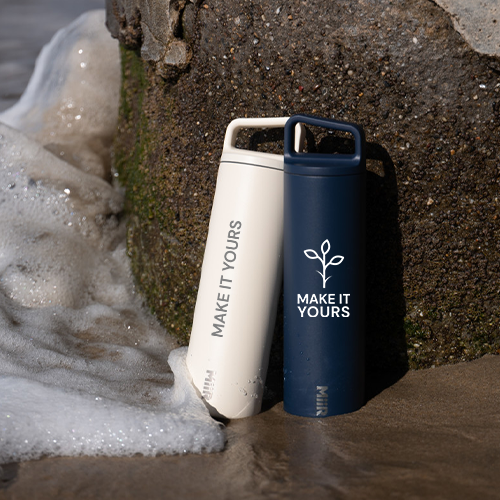
Built from 18/8 medical-grade stainless steel with Thermo 3D® double-wall vacuum insulation, this 20 oz wide-mouth bottle is designed for years of daily use. The environmental case rests on durability: a well-constructed reusable bottle displaces a measurable volume of single-use packaging over its life. Beyond the product itself, MiiR® is a Certified B Corp and donates 1% of revenue to nonprofits focused on community and environmental health. Every bottle includes a unique Give Code that lets the recipient track the specific project their purchase supports, turning a branded gift into a documented impact story rather than a general claim. BPA-free and PVC-free construction rounds out the checklist for organizations with high standards to meet.
Alpine Henley Long Sleeve Button-Placket Shirt (Men’s)
The Alpine Henley illustrates how apparel sourcing claims can be both specific and layered. The fabric combines recycled polyester with BCI (Better Cotton Initiative) cotton, addressing both post-consumer waste and farm-level agricultural practices in a single garment. UPF 50+ sun protection adds functional value that extends the shirt’s usefulness and wear life. On the compliance side, the shirt is manufactured in a certified WRAP facility, holds Global Textile Safety Standard certification, and meets ISO 14001 and 9001:2015 standards for environmental and quality management. Hang tags use FSC-certified paper and polybags contain at least 40% recycled content. For branded apparel programs where teams need to communicate sourcing transparency to employees or clients, each of these credentials is specific, third-party verified, and documentable rather than relying on broad benefit language.

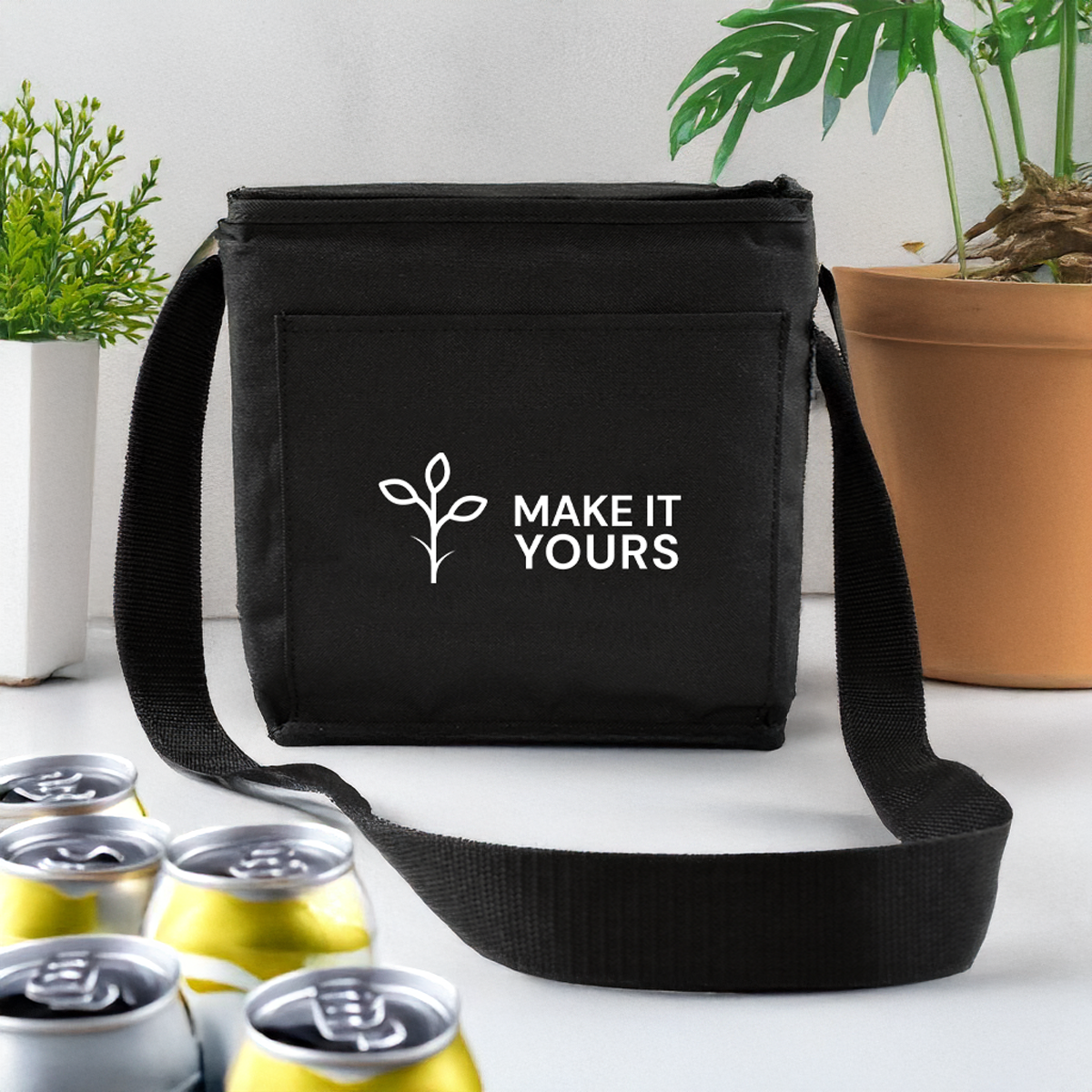
This food and beverage cooler is made from 100% recycled PET and produced in Canada, combining a verified material claim with a Canadian-origin story. The RPET exterior is built for long-term use, with 5mm thick padding that holds its shape, a non-toxic PEVA lining, and a three-sided zipper opening for full access. Each purchase supports the Tree Canada program. For procurement teams evaluating this product against the checklist, the recycled material claim is specific and quantified (100% RPET), the origin is transparent, and the social impact tie-in is documented through a named giving program rather than a general sustainability statement. It is a strong fit for organizations whose branded gifting programs are designed to reflect both environmental responsibility and Canadian sourcing values.
How Ethical Swag Supports Purposeful Procurement
Ethical Swag's product sourcing is built around the principle that every claim should be supportable. As a B Corp certified, zero-carbon distributor, the company applies supplier compliance standards across its catalog and organizes products through a Good/Better/Best framework that makes it easier for buyers to understand what level of verification a product carries.
The Good/Better/Best tiers work as follows: Good products come from cost-competitive, third-party audited suppliers. Better products meet the Good criteria and include sustainable material features such as recycled content or rapidly renewed materials. Best products bring together preferred sustainable materials, third-party accreditation, and B Corp certified or significantly audited giving-project suppliers, at a quality and price point that is competitive for corporate gifting programs.
For procurement and marketing teams navigating greenwashing compliance, this framework offers a practical filter: you can specify the tier that matches your program's standards and know that the certification and audit documentation behind each tier is available on request.
Frequently Asked Questions
What certifications should I look for when sourcing sustainable branded promotional items?
The most relevant certifications depend on the product category. For textiles and bags, look for GOTS (organic fibers) or GRS (recycled content). For wood and paper products, FSC certification confirms responsible sourcing with chain-of-custody tracking. For any product where chemical safety matters, OEKO-TEX Standard 100 is a meaningful third-party verification. Ask your supplier to confirm which certifications apply to the specific SKU you are considering, not just their catalog broadly.
Is "recycled" always better than "organic" when choosing promotional products?
Not necessarily, as these certifications address different environmental priorities and apply to different product types. Recycled content (verified under GRS) addresses waste and resource efficiency. Organic certification (verified under GOTS for textiles) addresses agricultural chemical use and production chain safety. The right choice depends on your organization's specific impact priorities. For many programs, the more useful question is not which is better in the abstract, but whether the claim on any specific product is verified and specific.
How do I know if a "compostable" product claim is legitimate?
Compostability claims are among the most frequently misused in the promotional products space. A product labeled compostable may only break down in industrial composting conditions, not in a home composter or standard organics bin. Before communicating a compostability claim to your team or clients, ask your supplier for the specific standard the product meets (such as EN 13432 or ASTM D6400) and what composting infrastructure is required. If that information is not available, the claim should not be used.
What does greenwashing compliance mean for my branded gifting program?
Sustainability-related claims need to be based in fact with adequate and proper substantiation completed before the claims are made. For marketing and procurement teams, this means that claims made about the promotional items you distribute, whether on packaging, in social posts, or in internal communications, should be traceable back to specific, verifiable product attributes. Working with suppliers who can provide certification documentation on request is a meaningful first step in building a compliant program.
What makes Ethical Swag different from other promotional products suppliers?
Ethical Swag carries B Corp certification, which means its own business practices are externally verified against social and environmental standards. More practically for buyers, it organizes its catalog through a Good/Better/Best framework that connects product tiers to defined sourcing standards, applies supplier compliance requirements across its catalog, and can provide audit results and certification documentation on request. That makes it possible for procurement teams to substantiate the claims they make about their branded gifts, rather than relying on general language that may not hold up to scrutiny.
Ready to Build a Branded Gifting Program You Can Stand Behind?
If your team is working through a branded gifting refresh, a compliance review, or an onboarding kit build, Ethical Swag's sourcing approach is designed to make the verification process straightforward. Reach out to book a swag project discovery call and get product recommendations matched to your program's standards.