


Plastic free is one of the most widely used sustainability claims in branded merchandise, but it is also one of the least clearly defined. From packaging and coatings to hidden components and lifecycle impact, plastic often shows up in ways brands do not expect. This article breaks down what plastic free actually means in promotional products, where the claim can fall short, and how to make more transparent, responsible choices that align with real-world use rather than surface-level labels.
Plastic free has become one of the most commonly used sustainability claims in branded merchandise programs, but it is also one of the least clearly defined. For teams responsible for employee onboarding, client engagement, internal culture initiatives, event experiences, and merchandise programs, the phrase plastic free often appears attractive, decisive, and values-driven. The challenge is that without context, plastic free can mean many different things, and misunderstanding it can lead to decisions that prioritize perception over actual impact. Understanding what plastic free really means in promotional products allows brands to move beyond surface-level claims and build programs that are more honest, more effective, and more aligned with long-term sustainability goals.
Why “Plastic Free” Became a Go-To Claim
Plastic has become the most visible symbol of environmental harm. Images of ocean pollution, landfill overflow, and microplastics in water systems have created a strong emotional association between plastic and waste. As sustainability expectations have risen, brands have felt increasing pressure to demonstrate responsibility in tangible ways. Merchandise is one of the most visible expressions of a brand’s values, making it a natural place to signal change. Plastic free sounds simple, definitive, and easy to communicate, which is why it shows up so frequently in marketing language across the promotional products industry. Historically, many low-cost promotional items relied heavily on plastic because it was inexpensive, lightweight, and versatile. As awareness grew, suppliers responded by offering alternatives and reframing materials. The issue is not that plastic free is inherently misleading, but that it is often presented without explanation, nuance, or boundaries, leaving teams to assume it represents a complete solution when it rarely does.
What Plastic Free Actually Means in Promotional Products
At its strictest definition, plastic free means that no plastic is used anywhere in the product or its packaging, including coatings, adhesives, laminations, liners, and protective wrap. In practice, very few promotional products meet this standard, especially items with technical components or durability requirements. More commonly, plastic free is used to describe products where the primary material is non-plastic, such as metal, glass, wood, paper, cork, bamboo, or natural fibers. These items may still contain small plastic elements that are not immediately visible or disclosed, such as interior seals, stitching reinforcement, or surface finishes. In other cases, plastic free refers only to the product itself and excludes packaging entirely, even when that packaging includes plastic polybags or protective film. There is also a softer interpretation where plastic free is used to mean significantly reduced plastic compared to conventional alternatives. Without clarification, all of these interpretations can exist under the same label, which is why asking specific questions matters.
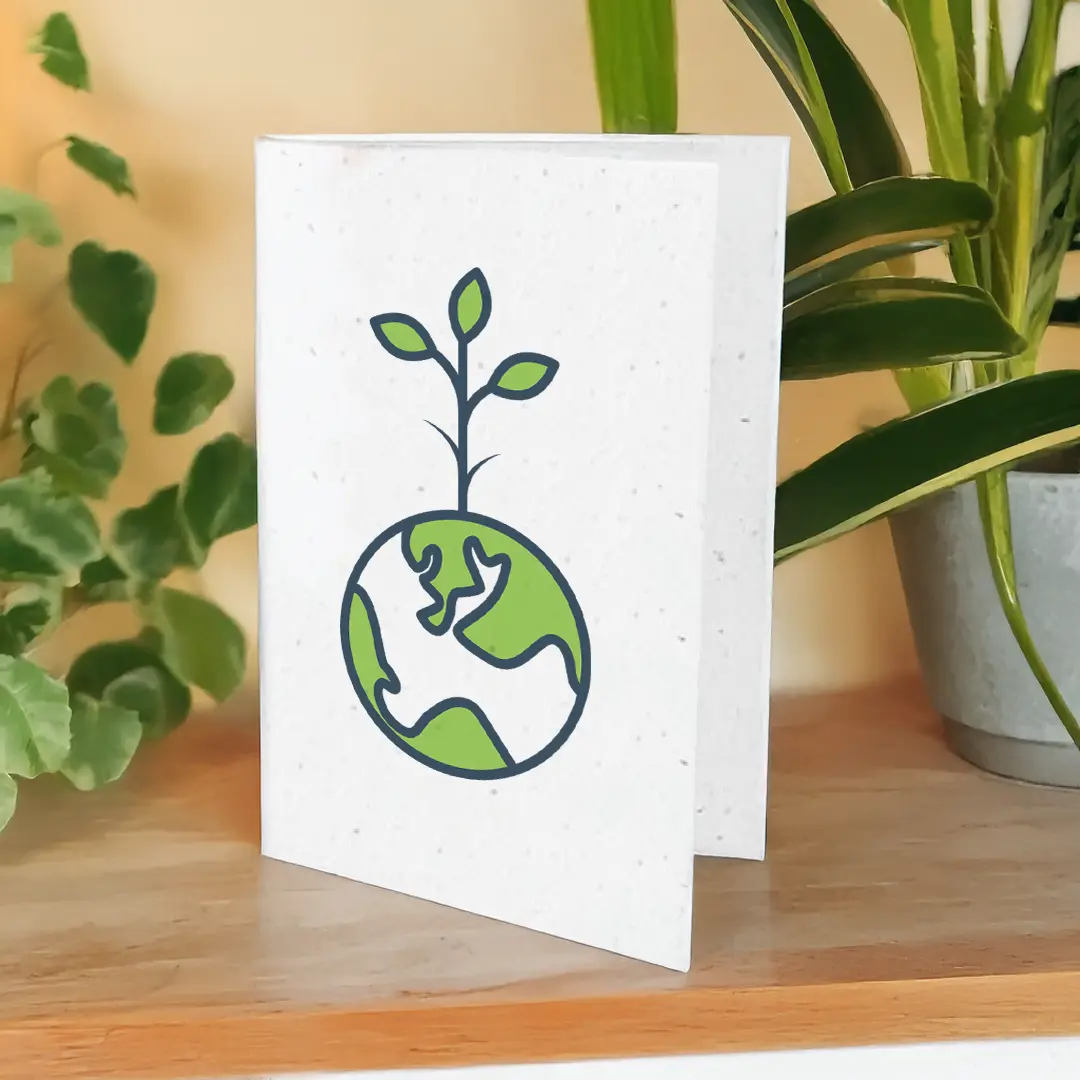
Product highlight: Medium Seed Paper Greeting Card 1-Sided
Where Plastic Often Hides
One of the reasons plastic free claims are so difficult to evaluate is that plastic frequently appears in places people do not expect. Packaging is the most common example. A notebook made from recycled paper may arrive individually wrapped in plastic. A stainless steel water bottle may include a plastic inner lid or silicone gasket. A cotton tote may use synthetic thread, reinforced plastic seams, or a coated interior. Coatings and finishes are another common source. Many paper products use plastic-based laminations to increase durability or moisture resistance. Colored metal items often rely on plastic-based powder coatings. Even inks, labels, and adhesives can contain plastic components. None of this automatically disqualifies a product from being a responsible choice, but it does mean that plastic free should be understood as a directional goal rather than an absolute guarantee unless proven otherwise.
Plastic Free vs Reduced Plastic
For many brands, reducing plastic is both more achievable and more impactful than attempting to eliminate it entirely. Removing unnecessary packaging, replacing virgin plastic with recycled content, and choosing designs that last longer can significantly lower environmental impact without compromising usability. In merchandise programs, reduced plastic often shows up through paper mailers instead of polybags, refillable systems instead of disposable items, metal or wood alternatives where plastic once dominated, and thoughtful curation that prioritizes fewer, higher-quality products. These decisions may not qualify as plastic free under a strict definition, but they often lead to better outcomes in real-world use. A durable product that includes some recycled plastic but is used daily for years can create far less waste than a fully plastic free item that is quickly discarded. Context and behavior matter just as much as materials.
Product highlight: Upcycled Single Gold 12 oz Cup Glass

When Plastic Free Makes Sense
There are many categories where plastic free products are both practical and effective. Paper-based goods like journals, notebooks, planners, and stationery are natural fits. Apparel made from organic cotton, hemp, wool, or responsibly sourced natural fibers can avoid synthetic materials entirely. Kitchen and home items made from wood, stainless steel, cast iron, or glass often offer long lifespans and intuitive reuse. These products work especially well for programs where values storytelling is a priority, such as employee welcome kits, sustainability campaigns, client appreciation gifts, or milestone recognition. When the material choice is obvious and easily understood, it reinforces your message without requiring explanation. However, durability should always be considered. A plastic free item that breaks, warps, or wears out quickly undermines the intent behind it.
When Plastic Free Can Be Misleading
Plastic free does not automatically mean low impact. Some alternative materials come with their own environmental tradeoffs. Bamboo grows quickly and is often positioned as a sustainable alternative, but processing methods, binding agents, and long-distance shipping can complicate its footprint. Glass and metal are highly recyclable but require significant energy to produce and transport. Wood products may involve deforestation concerns if sourcing is not carefully managed. There is also the risk of focusing too narrowly on materials while ignoring scale and logistics. A plastic free item shipped individually across long distances with excessive packaging may generate more emissions than a responsibly made product that includes some recycled plastic and is distributed efficiently. Sustainability is rarely solved by a single attribute, which is why holistic evaluation is essential.
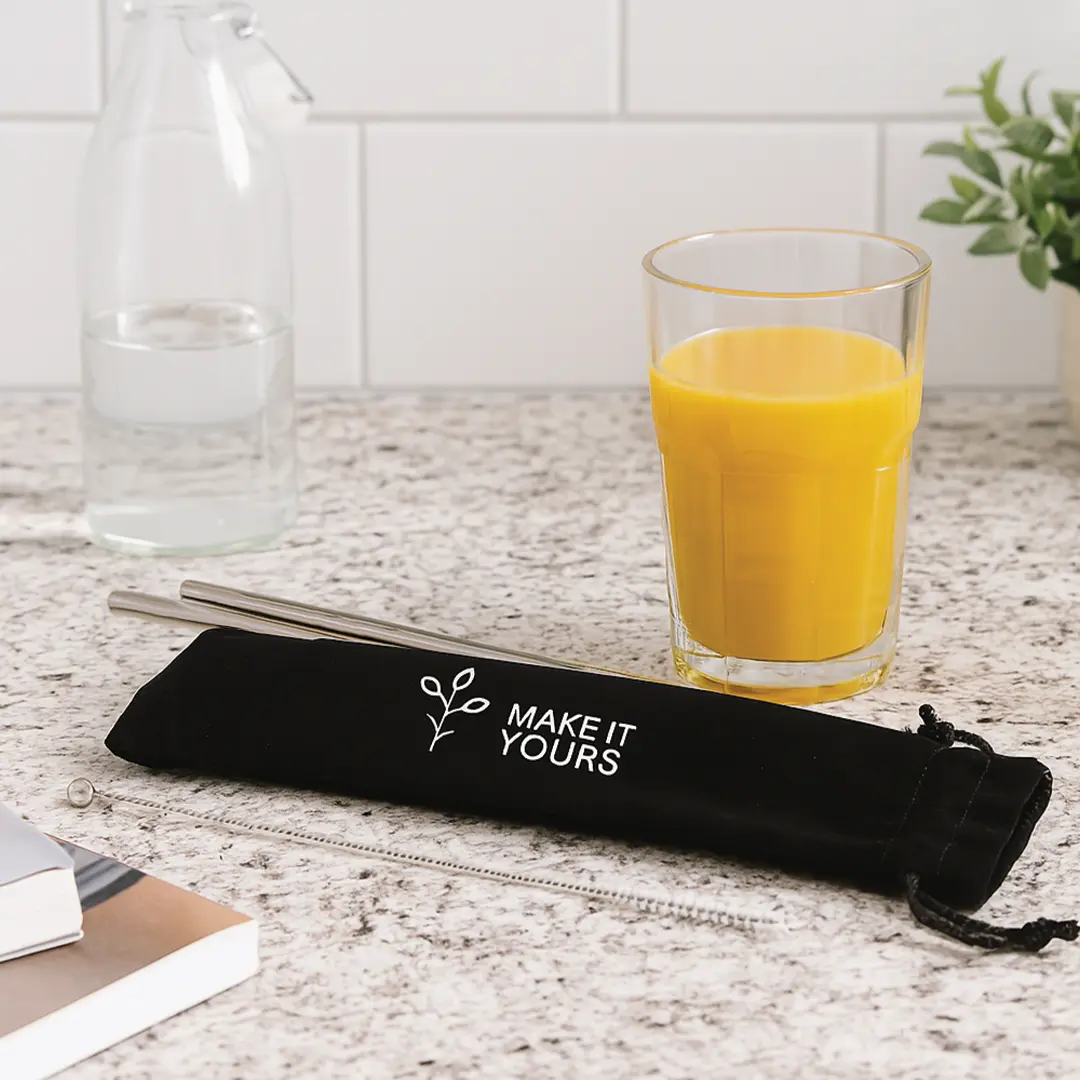
Product highlight: Reusable Stainless Steel Straw Set with Brush
How Ethical Swag Evaluates Plastic Free Claims
At Ethical Swag, we do not treat plastic free as a simple checkbox. We evaluate products based on materials, sourcing practices, packaging, durability, and end-of-life considerations. The goal is to make tradeoffs visible and intentional so teams can shop by their values with confidence.
Communicating Plastic Free Choices Honestly
How you communicate your choices matters as much as the choices themselves. Overstated claims can erode trust, especially as audiences become more knowledgeable about sustainability. Rather than leading with absolutes, focus on specifics. Explain which materials were chosen and why. Share where plastic was reduced or eliminated and where it could not be. Highlight durability, refillability, or reuse potential. This approach builds credibility and allows room for progress. Sustainability is not static, and being transparent about where you are today makes it easier to evolve tomorrow without needing to backtrack on claims.
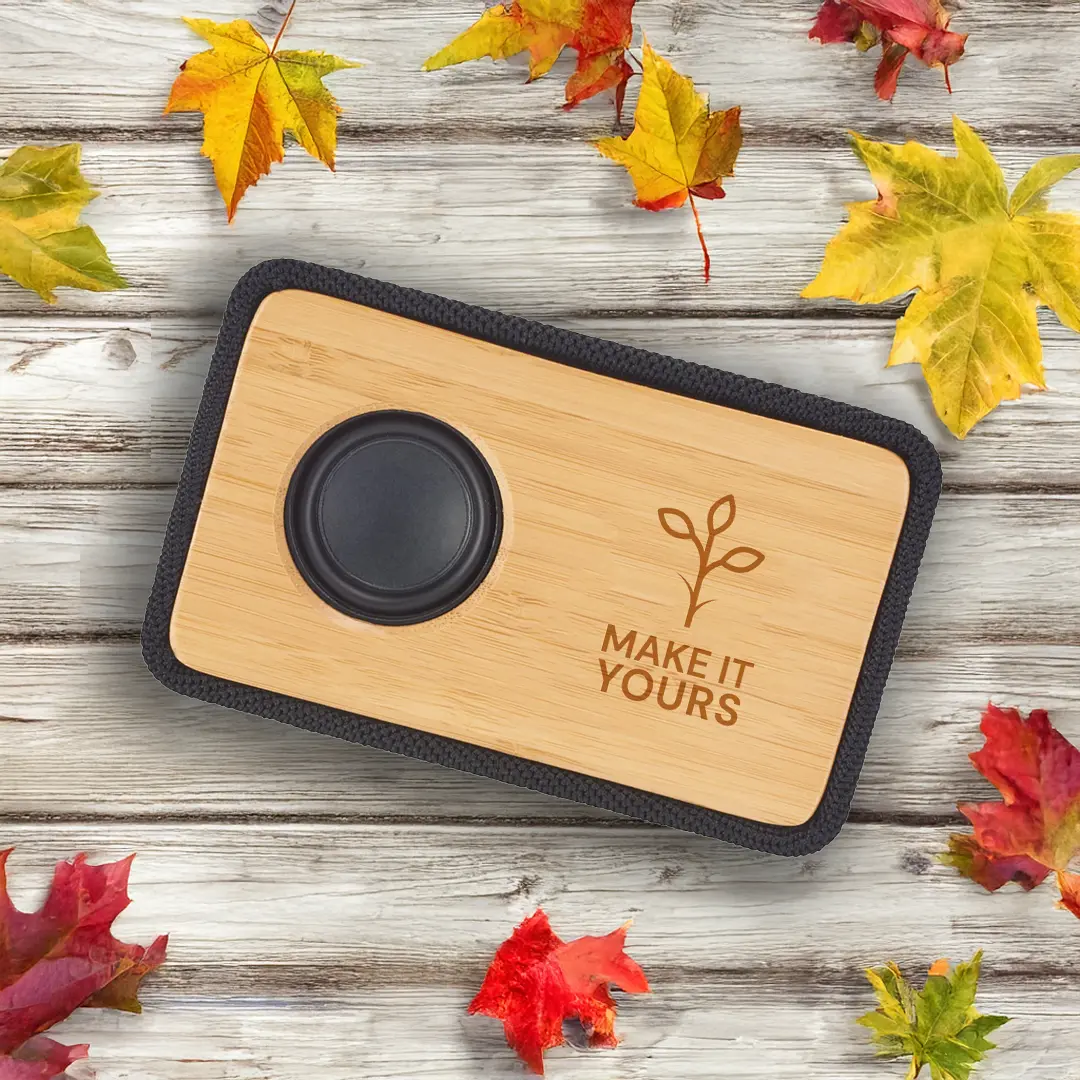
Product highlight: Natural Bamboo Bluetooth Speaker
Plastic Free Within a Smarter Merchandise Strategy
Plastic free should never exist in isolation. The most effective merchandise programs prioritize usefulness, longevity, and alignment with brand values. They avoid excess. They offer choice. They focus on products people genuinely want to keep and use. In many cases, distributing fewer items has a greater environmental benefit than swapping one material for another. Choice-based campaigns, curated selections, and opt-in fulfillment reduce waste at the source. Plastic free can absolutely be part of this strategy, but it should support the fundamentals rather than distract from them.
Frequently Asked Questions
Q: Is plastic free always better for the environment?
A: Not necessarily. While eliminating plastic can reduce certain types of pollution, other materials may have higher energy, water, or transportation impacts. Overall footprint depends on sourcing, manufacturing, use, and disposal.
Q: Can tech products be plastic free?
A: Very rarely. Most technology products require plastic components for safety, insulation, or performance. In these categories, focusing on durability, recycled content, and reduced packaging often delivers better outcomes.
Q: What should I ask suppliers about plastic free claims?
A: Ask which parts of the product are plastic free, including packaging. Ask about coatings, liners, adhesives, and hidden components. Ask how the product is intended to be used and how long it is expected to last.
Q: How can we reduce plastic without increasing budget?
A: Removing individual polybags, switching to paper mailers, consolidating shipments, and prioritizing fewer high-quality items can significantly reduce plastic without raising costs.
Q: Is recycled plastic better than plastic free materials?
A: It depends. Recycled plastic reduces demand for virgin plastic and can be an excellent choice for durable items. In many cases, long-term use matters more than material purity.
Summary
Plastic free is an appealing idea, but it is not a simple solution. In promotional products, it represents a spectrum of choices rather than a single standard. The most responsible approach is grounded in transparency, intention, and real-world use. By understanding where plastic appears, questioning claims, and considering lifecycle impact, brands can make decisions that genuinely reduce waste and reflect their values rather than relying on surface-level labels.
If you are reviewing your merchandise strategy and want help navigating plastic free and low-waste options in a way that actually works for your team and your audience, reach out to info@ethicalswag.com or book a Free Swag Project Intro Call with us today.