


Most companies don't have a swag strategy. They have a swag problem they're managing: boxes in closets, rush orders, and nobody quite sure what's in stock. A swag strategy fixes the system behind the swag. That means one shared view of inventory, orders planned around real moments, evergreen items kept on hand, everything else made on demand, and products good enough that people keep them.
Most companies don't have a swag strategy. They have a swag problem they're managing.
I saw this early on. Companies said they stood for one thing, then handed out products that said something else. As an industry, we'd normalized cheap giveaways ordered by the thousand, and the result was a lot of logos ending up in the trash or at the back of a drawer. That's not a great reflection of any brand.
At first, I thought it was a brand issue. It's not. It's operational. Cheap, forgettable swag is usually what happens when there's no plan: no clear idea who it's for, no view of what's already in stock, and no time to choose well.
Somewhere in most offices there's a closet with a box of conference t-shirts nobody remembers ordering. There's a stack of notebooks from two logos ago. And there's a People Ops lead placing a rush order for onboarding kits, because nobody knew there were 40 tumblers sitting in the back room.
Nobody did anything wrong. There just isn't a system.
I've been sharing pieces of this idea on LinkedIn (the fridge post and the meal kit post). This post pulls it together and gets practical about how to manage company swag so it gets used, not stored.
What is the difference between a swag strategy and a swag problem?
A swag strategy is a plan for how your organization buys, stores, sends and tracks branded merchandise, so every item has a job and someone knows where it is. A swag problem is what you have when those decisions get made one order at a time.
A few signs you're managing a problem:
You reorder things you already have, because nobody can see the stock.
Swag lives in three places: a closet, someone's basement and a box under a desk.
Every new hire, event or client gift starts with a rush order.
Old branding keeps getting handed out because it's what's left.
Nobody can say what the program costs per team, or what actually got used.
If two or more of those sound familiar, you're in good company. That's how most companies manage swag. (For the product side, our post on 5 signs your company swag needs an update is a quick audit of what's already in rotation.)
Why does so much company swag go unused?
The best way I can describe it: it's like the fridge in a busy household.
You open the fridge. It's full. But you don't really know what's there, or how to turn it into something good. So things get missed. Things don't get used. And eventually, they go bad.
Swag works the same way. Sometimes there's too much. Sometimes it's not used well. But most of the time, it's not managed with intention. Good products sit in a box until the branding is out of date, then get handed out with an apology or thrown away.
That wastes budget and good material. It also misses the point. ASI's 2026 Global Advertising Impressions Study found that 78% of people keep promotional products because they find them useful. Useful only counts if the item makes it into someone's hands.
What did meal kits get right that most swag programs miss?
There's a reason meal kits like HelloFresh took off. Not because people needed more food. Because the old way wasn't working.
You bought what you thought you needed, but you didn't always use it well. You didn't know what was already in the cupboard. You weren't sure what to make with it. Good ingredients went to waste.
What changed wasn't the food. It was the system: the right amount, a plan for using it, and delivery when you needed it. Better ingredients. Better system. Different outcome. Less waste, better results.
Swag is the same. The difference isn't how much you buy. It's what you do with it.
What does a good swag strategy look like?
You don't need a 40-page plan. You need a few basics in place. Here's what we see work for HR, People and Culture, marketing and procurement teams across Canada and the US.
1. Know what you already have
Before you order anything, get your stock into one place you can see. When swag is spread across offices and basements, people reorder because it's faster than looking.
This is why warehousing is part of how we work. We store client swag in our own warehouses in Toronto and Salt Lake City, so Canadian orders ship from Canada and US orders ship from the US. Clients see live inventory in SwagCentral, our dashboard, with low-stock alerts so they reorder when they actually need to, not "just in case."
2. Plan around moments, not orders
Start with the moments that matter to your team: onboarding, work anniversaries, client thank-yous, events, the holidays. Decide what each moment needs and how many you'll realistically use in a year. Our guide to intentional swag planning has a checklist for this.
Once the moments are clear, swag packs and kits take a lot of the work out. Build a new hire kit once, store it, and send it each time someone starts. (Here's what to put in a new hire welcome kit.)
Not sure what's in your swag closet? Tell us what you have and what's coming up this year. We'll help you sort out what to keep, what to store and what to stop ordering.
3. Keep evergreen items on hand. Make the rest on demand.
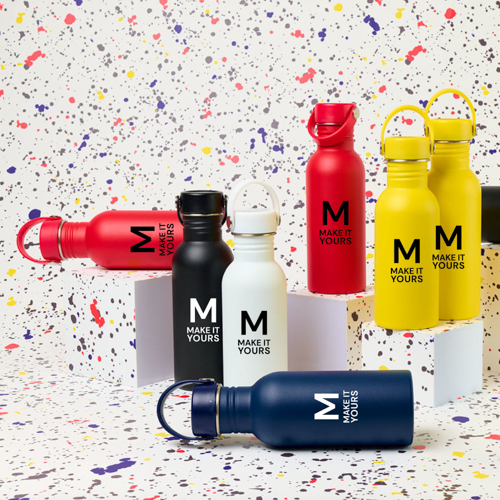
Some items are safe to keep in stock because they don't go out of style or come in sizes. Drinkware, notebooks and bags are the usual ones. Two examples:
The Evo Essential Stainless Steel Hydration Bottle 17 oz is made by a Certified B Corporation, in 18/8 stainless steel, in facilities audited under SMETA, BSCI and SA8000. It's rated Best on our Good, Better, Best scale.
The Recycled Notebook with Soy-Based Ink 6 x 9 Inch uses 100% recycled paper and FSC Mix certified materials, printed with soy-based ink. Also rated Best.

Apparel, event-specific items and anything with a date on it are better made when you need them. For gifts, pop-up shops and choice-based gifting let people pick what they want, so nothing gets made until someone chooses it. CarGurus has run choice-based holiday gifting with us this way for more than five years.
And when timing is tight, Swift Swag items ship in 10 business days or less.
4. Give one person ownership, and give teams access
Swag problems grow when everyone can order and no one is responsible. Name an owner for the program. Then let teams draw from the shared stock, with budgets by team or location so spending stays visible. SwagCentral handles this with team budgets, shipment requests and tracking on every send. For larger or multi-location organizations, a company store gives employees one branded place to order.
5. Choose products worth keeping
A good system can't fix a bad product. If an item isn't useful, it ends up in a drawer no matter how well you track it. Our Good, Better, Best framework rates every product in our catalog, so you can shop Best-rated products or set a tier for each part of your program. If you're starting fresh, here's how to design branded items employees will actually use.
Why does this matter to us?
When I started Ethical Swag, it wasn't about selling more. Companies were already buying. They just didn't, and still don't, have a way to manage it that reflects their brand.
We're a Certified B Corporation, formally committed to donating more than 20% of our profits to charity each year, and we pay attention to what happens to a product after it ships. We help good organizations look like it. Most of the time, that's less about adding items and more about using the right ones well.
Our goal isn't to get you to buy more. It's to make what you put into the world count.
Frequently asked questions
What is a swag strategy?
A swag strategy is a plan for how an organization buys, stores, distributes and tracks branded merchandise. It ties each item to a real use, like onboarding, events or client gifts, and gives one person clear ownership of inventory and budget. The goal is less waste and more swag that actually gets used.
How do you manage company swag inventory?
Keep all stock in one place with a live count, so teams check before they order. Set low-stock alerts for items you send often, review inventory at least once a year, and plan quantities around how many people you'll actually reach. A warehousing partner with an inventory dashboard, like Ethical Swag's SwagCentral, can handle storage, shipping and tracking for you.
Should we buy swag in bulk or on demand?
Both, for different items. Bulk works for evergreen products like drinkware, notebooks and bags that don't depend on sizes or dates. On demand, pop-up shops or choice-based gifting work better for apparel, event-specific items and gifts where preferences vary.
Is warehousing swag worth it for a mid-sized company?
It usually is once you send swag regularly to people in different places, like remote hires or multiple offices. Storage, packing and shipping happen in one spot, and you stop paying for rush orders on items you already own. For Ethical Swag clients, Canadian orders ship from Toronto and US orders ship from Salt Lake City, so swag doesn't have to cross the border.
How can a company reduce swag waste?
Order for the moments you know are coming, not "just in case." Keep only timeless items in stock, choose products people will use, and let recipients choose when preferences vary. Before the next order, check what's already on the shelf.
Who should own a company swag program?
Usually HR or People and Culture for employee swag, and marketing for events and client gifts, with procurement involved on budget and suppliers. What matters most is that one person is responsible for inventory and reordering, even if many teams use the swag.
Ready to turn your swag problem into a swag strategy?
If your swag lives in a closet and your orders start with "we need it by Friday," let's talk. We'll look at what you have, what's coming up and how to make it all easier to manage.