


Branded promotional products are often treated as a marketing line item, but they carry a cultural message every time an employee, client, or event attendee receives one. This post looks at how customized promotional items can reinforce genuine company values, and how the wrong approach to company swag can quietly signal the opposite. It also outlines a simple framework for choosing branded products that support the culture a company is actually trying to build.
Every branded promotional item a company hands out says something about how that company operates, whether the team intends it to or not. A thoughtful branded gift at onboarding can signal that a new hire's comfort matters from day one. A box of leftover company swag from three rebrands ago, pulled out for a client meeting, sends a very different message. For procurement managers, HR and People Ops teams, and event planners, the question is not whether branded promotional products affect company culture. They do. The real question is whether that effect is the one leadership actually intended.
Why Branded Products Are a Culture Signal, Not Just a Line Item
Branded promotional products sit at an unusual intersection of marketing, HR, and operations. They are often ordered by procurement, distributed by HR or events, and experienced by employees and clients as a small, personal moment. That combination means the same tote bag or notebook can either reinforce what a company says it values or contradict it, depending on the quality, the timing, and the thought behind the choice.
A company that talks about sustainability but hands out plastic items destined for a landfill within a year is telling employees which set of values actually gets budget. A company that talks about care for its people but only distributes branded promotional items during high-visibility client events, never for the team itself, is telling employees something too. Culture is built from patterns of small signals, and branded products are one of the more visible and frequent ones.
When Branded Products Strengthen Company Culture
Branded products support culture when they solve a real problem, arrive at the right moment, and hold up to daily use. A well-made onboarding kit that a new employee actually keeps on their desk for years does more for culture than a warehouse of unused giveaways ever could.
• Milestone recognition, such as a work anniversary gift, that feels personal rather than generic
• Onboarding kits that help a new hire feel prepared and welcomed on day one
• Remote and hybrid team gifts that create a shared, tangible connection across distance
• Client-facing branded gifts that reflect the same standards a company holds internally
In each of these cases, the branded promotional item is not the point. It is a vehicle for a message the company already wants to send, which is why the product choice matters as much as the occasion.
When Branded Products Quietly Undermine Culture
The same category of product can work against culture just as easily. Overordering promotional products "just in case" often results in boxes of branded gear that sit in a storage closet for years, which employees notice and interpret as waste. Choosing the cheapest available option to hit a per-unit budget target, regardless of quality or durability, sends a message that appearances matter more than substance.
Vague or overstated claims cause similar damage. If a company markets its promotional products as broadly "green" or "sustainable" without being able to explain what specifically makes that true, employees and clients who look closely will notice the gap, and the resulting skepticism tends to spread to other parts of the company's messaging. Culture erodes fastest when people sense a mismatch between what leadership says and what leadership actually does, and branded products are an easy place for that mismatch to show up.
A Framework for Choosing Culture-Aligned Branded Products
Choosing branded promotional products that genuinely reflect company culture does not require guesswork. Ethical Swag's Good, Better, Best sourcing framework gives procurement and HR teams a consistent way to evaluate options before committing budget.
• Good: sourced from third-party audited suppliers that meet baseline labor and safety standards
• Better: made with sustainable material features, such as recycled or responsibly sourced inputs
• Best: preference for North American-made products, preferred materials, third-party accreditation, B Corp suppliers, or products tied to a significant, audited giving project
Applying a tiered framework like this turns "does this product reflect our culture" from a subjective question into a repeatable one, which matters when multiple teams across a company are ordering branded promotional items throughout the year.
Where to Use Branded Products Intentionally Across the Employee and Client Journey
Culture-aligned branded products tend to cluster around a few recurring moments rather than being distributed at random. Mapping those moments in advance helps procurement and HR plan quantities and budget instead of reacting to last-minute requests.
• New hire onboarding, where a well-chosen branded gift sets the tone for the employment relationship
• Recognition moments, including anniversaries, promotions, and team milestones
• Company events and offsites, where event giveaways reinforce shared identity
• Wellness and appreciation campaigns tied to specific initiatives rather than generic giveaways
• Client and partner touchpoints, where branded promotional items should reflect the same standard used internally
Four Branded Products That Reinforce a Culture of Care
The products below were chosen because each one supports a specific culture moment described above, rather than functioning as a generic giveaway.
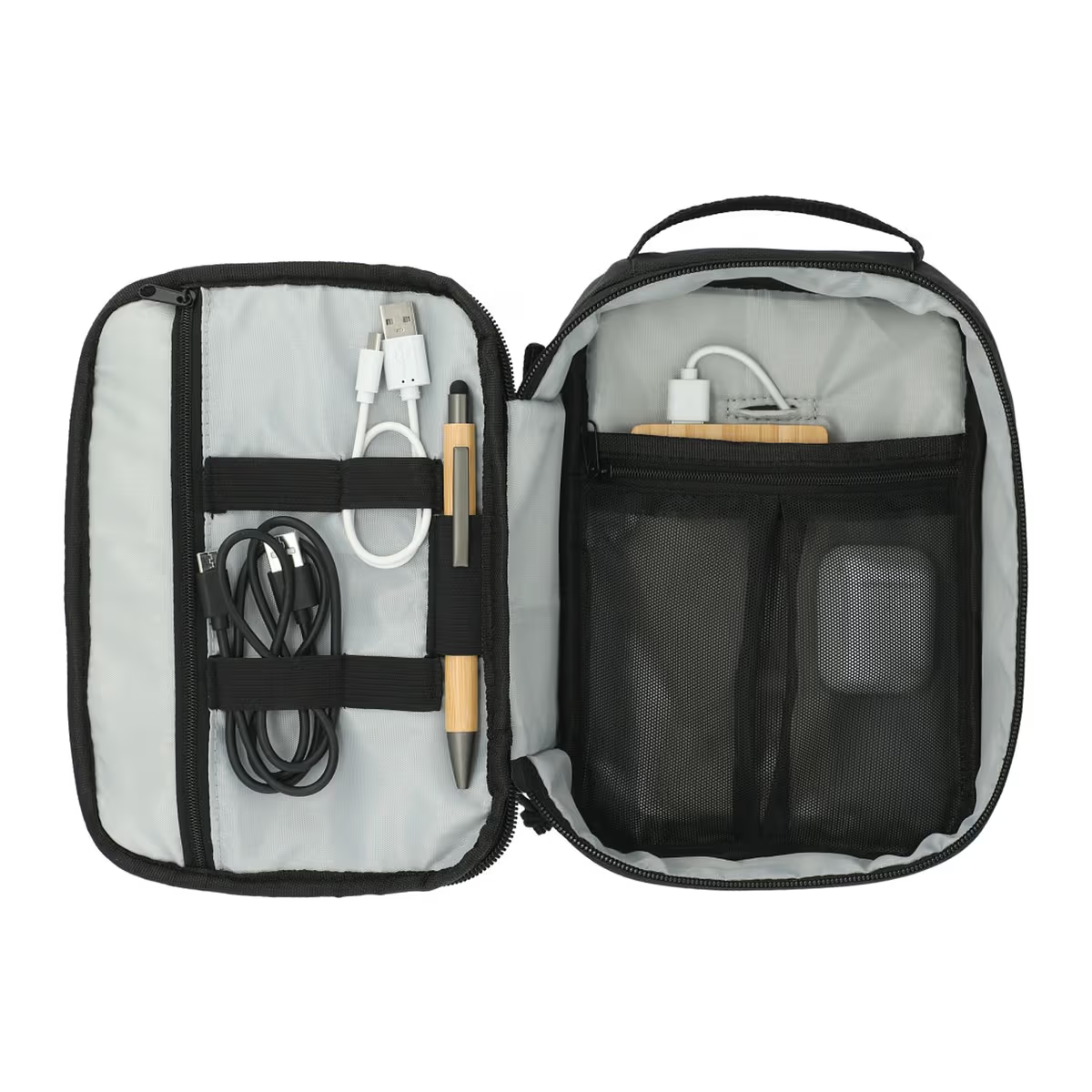
Recycled Tech Organizer with Cable Passthrough
Made from recycled 600D polyester, this organizer keeps charging cables, a power bank, and earbuds contained in one place, with a cord passthrough that lets a device charge while it stays packed. A portion of every purchase supports the 1% for the Planet program.
For a hybrid or frequently traveling team, an item like this solves a real daily annoyance instead of adding to desk clutter, which is exactly the kind of practical, values-aligned gift that reinforces a culture built around genuine usefulness rather than novelty.
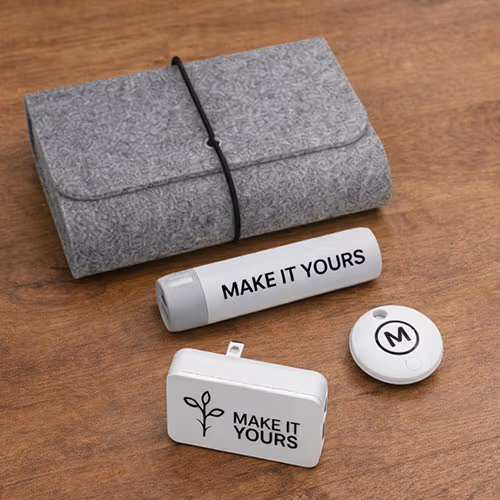
This set bundles a portable power bank, a dual-port travel wall plug, and a Bluetooth tracking device inside a recycled felt travel case, giving a commuting or traveling employee a complete kit rather than a single disconnected item.
Because it addresses several small travel frustrations at once, this gift set works well as a milestone or appreciation gift for teams that spend a lot of time on the road, showing employees that the company paid attention to what their day actually looks like.
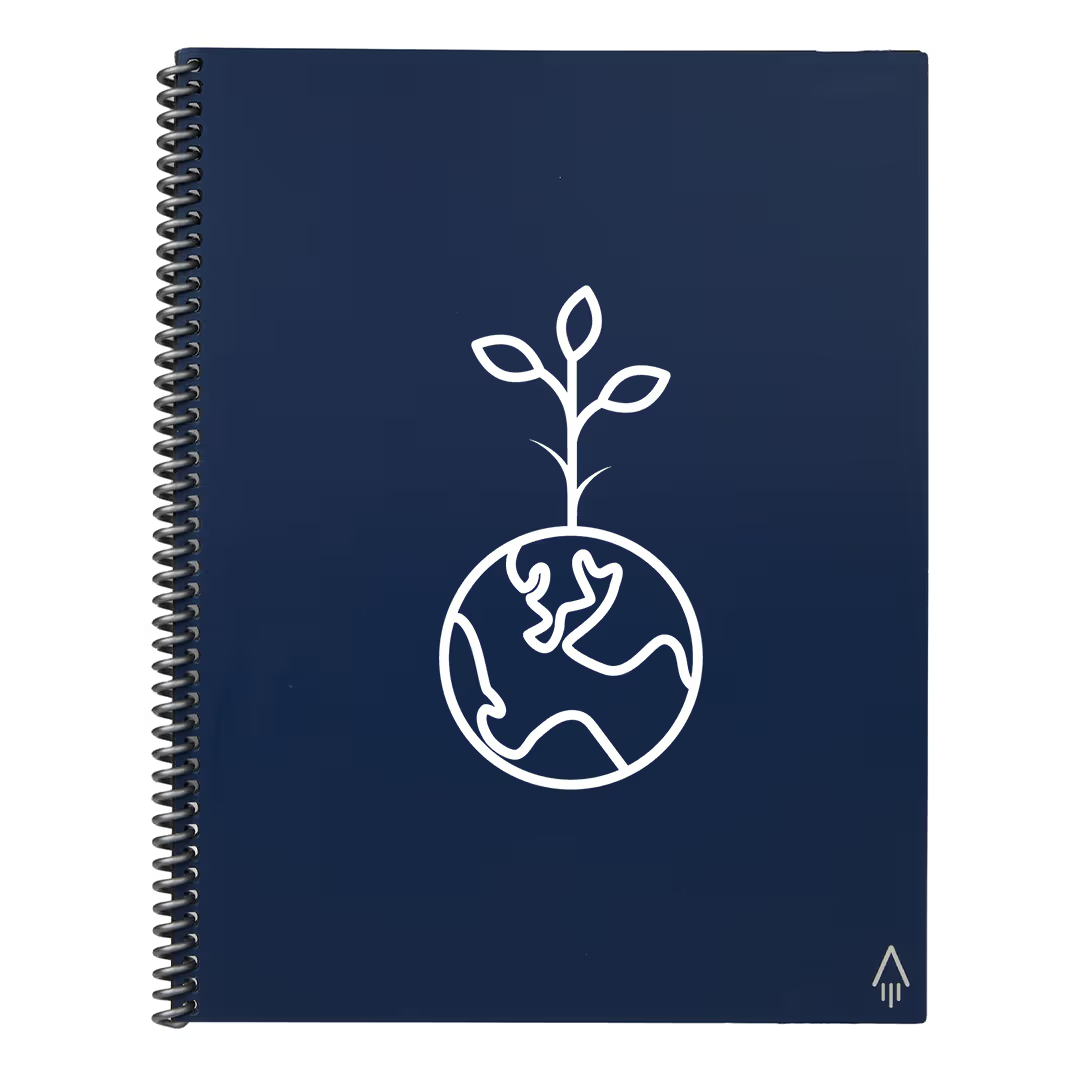
Rocketbook Reusable Smart Notebook Set
This notebook set pairs a reusable, wipeable notebook with an erasable pen and a cloud-scanning system, so handwritten notes can be captured, organized, and reused instead of thrown away after a single meeting.
For a company culture that values both sustainability and productivity, a reusable notebook communicates that message every time it is opened, making it a strong fit for onboarding kits or team offsites where note-taking habits are being established.
Recycled 5000mAh MagSafe and USB-C Power Bank with Apple Watch Charger
Built from recycled ABS plastic and carrying an FSC certification, this power bank charges a phone wirelessly and a smartwatch at the same time, and its packaging unfolds into a functional desk calendar once the product is unboxed.
A product that keeps working long after the unboxing moment, down to its own packaging, is a small but memorable way to reinforce a culture that values resourcefulness over disposability, particularly for remote or hybrid teams who rely on personal devices throughout the day.

How Ethical Swag Supports Culture-Driven Organizations
Ethical Swag built the Good, Better, Best sourcing framework specifically so that companies do not have to choose between convenience and confidence when selecting branded promotional items. Every product in the catalog is placed into one of these three tiers based on supplier auditing, material sourcing, and additional standards such as North American manufacturing preference or third-party accreditation, giving procurement and HR teams a clear, consistent way to match branded product choices to the culture they are trying to build, without needing to independently vet every supplier themselves.
FAQ: Branded Products and Company Culture
Do branded promotional products actually affect company culture?
Yes, branded promotional products influence how employees and clients read a company's values. A thoughtful, well-made item reinforces trust, while a low-quality or overstocked item signals that appearances take priority over substance. Because these products are experienced personally and repeatedly, they carry more cultural weight than most marketing materials.
Can branded gifts make company culture worse?
Yes, poor choices in branded gifts can quietly damage culture over time. Overordering items that go unused, choosing the cheapest available option regardless of quality, or making vague sustainability claims that do not hold up all create a gap between stated values and actual behavior, which employees tend to notice.
What makes a branded product culture-aligned instead of generic?
A culture-aligned branded product solves a real need for the person receiving it and reflects the same standards the company applies elsewhere. Generic swag is chosen for low cost or convenience, while culture-aligned products are chosen because they fit a specific moment, such as onboarding or recognition, and hold up to daily use.
How should HR teams choose branded gifts that reflect real values?
HR teams should evaluate branded gifts against a consistent framework rather than choosing based on price alone. Asking whether a supplier is third-party audited, whether the materials are genuinely sustainable, and whether the product will still be useful in a year helps HR teams avoid gifts that undercut the values they are trying to represent.
Does sustainable sourcing change how employees perceive branded products?
Yes, employees increasingly notice whether a company's branded products match its stated sustainability commitments. A specific, verifiable detail, such as a recycled material or a supplier certification, builds more trust than a broad, unsupported claim, and mismatches between messaging and product quality tend to reduce that trust over time.
How often should a company review its branded product strategy?
Most organizations benefit from reviewing their branded product strategy at least once a year, or whenever company values, team size, or work arrangements shift meaningfully. A yearly review helps catch outdated inventory, mismatched messaging, and opportunities to better align branded gifts with the culture the company is currently building.
Related Reading
For more on building an onboarding program that’s effective and intentional, read our guide on Employee Onboarding.
For background on how B Corp certification standards work, read our B Corp certification guide.
Ready to Choose Branded Products That Reflect Your Culture?
If your team is rethinking how branded promotional items show up across onboarding, recognition, events, and client touchpoints, we would be glad to help. Book a swag project discovery call and we will walk through options that fit your budget, your timeline, and the culture you are building.