


Most branded items end up in a drawer or the trash because they were designed around the logo instead of the person receiving them. The fix is to choose useful products, keep branding subtle and well made, and match items to routines employees already have. This guide covers the design principles that matter most, plus five product picks that tend to stay in daily rotation.
Almost every company has a closet somewhere filled with leftover shirts, stress balls, and pens nobody asked for. When teams set out to design branded items, the conversation usually starts with the logo: how big it should be, which color to use, and where it goes. Far less time goes to the question that decides whether the item survives the week. Will anyone actually want to use this?
Branded promotional items, sometimes called company swag, only earn their budget when they become part of someone’s day. A cap that fits well gets worn on weekends. A tumbler that keeps coffee hot rides along on the commute. A notebook that solves a real problem sits open during every meeting. In each case, the product does the work and the branding comes along for the ride.
Below, we cover why usability gets overlooked, how to balance subtle design with visibility, and which products employees reach for again and again.
Why So Much Company Swag Ends Up in the Trash
Usefulness is the single biggest reason people hang on to branded items. In ASI’s 2026 Ad Impressions Study, 78% of U.S. consumers said they would keep a promo item because it’s useful. Most discarded items fail that test for a few predictable reasons, all rooted in designing for the order form rather than the person.
The product solves no real problem. Novelty items are fun for a moment, then they become clutter with nowhere to live.
The logo is the whole design. An oversized, full-front logo turns a useful item into a billboard, and few people want to carry a billboard outside of work.
Quality signals indifference. Thin fabric, leaky lids, and prints that crack after one wash tell employees the item was an afterthought, and people treat it the same way.
It doesn’t fit anyone’s routine. A golf accessory for a team that doesn’t golf has no natural place to go.
The colors clash with real life. Bright corporate colors look great in a brand guide and often look out of place on a weekend outfit or a home office desk.
If a few of these sound familiar, our post on the 5 signs your company swag needs an update walks through a quick audit. The common thread is that usability was treated as optional. Make it the starting point and every other decision gets easier.
How to Design Branded Items for Everyday Use
The goal is a product people reach for daily, decorated so it feels like a thoughtful gift rather than an ad. These five principles help you get there.
Start With the Routine, Not the Logo
First, map out your team’s days. Do they commute? Work hybrid? Spend hours on video calls? Travel to client sites? The answers point you toward categories with built-in staying power. Our guide to back-to-office giveaway ideas that support employee well-being shows how daily routines shape which items get used, and the same thinking applies to year-round employee gifting.
A useful test is to imagine the item with no logo at all. Would someone still buy it for themselves? If the answer is yes, you have a strong foundation.
Keep the Logo Subtle and Intentional
Subtle doesn’t mean invisible. It means the branding is sized and placed so it complements the product instead of taking it over. A small embroidered mark on the front of a cap, a laser-engraved logo on the back of a tumbler, or a discreet print on the base of a desk accessory keeps your brand present without making the item feel like a uniform.
Some teams swap the full wordmark for secondary artwork, such as an internal rallying phrase or a simple brand icon. These details feel like an inside reference and often look better than the logo itself.
Pick Decoration Methods That Age Well
How the logo is applied matters as much as where it sits. Embroidery adds texture and holds up to repeated wear on headwear. Laser engraving on stainless steel drinkware creates a permanent, clean tone-on-tone mark that won’t peel. Suede-look and leather-look patches give caps a retail-style finish. When in doubt, ask for a virtual proof and a sample before committing to bulk.
Choose Colors People Already Live With
Neutral and muted tones such as black, navy, white, grey, and stone blend into wardrobes, bags, and desks far more easily than saturated brand colors. Your palette can still show up through thread color or packaging. Tonal decoration, where the logo is only a shade or two different from the product, is one of the simplest ways to make an item feel elevated.
Treat Quality as Part of the Design
A well-made product tells the recipient the company valued them, and it lasts longer. Fewer, better items usually get more real-world exposure than a large order of disposable giveaways. It also helps to know what’s behind the product. If you can’t say what it’s made of or where, our guide on how to avoid greenwashing in branded merchandise covers the questions worth asking.
Branded Items Employees Will Actually Use: Five Practical Picks
The categories below consistently earn a place in people’s daily routines. Each pick pairs everyday usefulness with decoration options that keep the branding understated.
Everyday Headwear: Expedition Cap
A ballcap is one of the most worn branded items when it looks like something people would buy in a store. The Expedition Cap fits that description, with a five-panel silhouette and a clean, classic look that works on a trail, at school pickup, or on a casual Friday.
For subtle branding, it offers several routes: front-panel embroidery, a full-color heat transfer, or a laser-etched patch in faux suede or faux leather, in round or rectangular shapes. A small tan or grey patch on a pewter or navy cap reads more like a boutique label than corporate issue. A snapback closure, embroidered eyelets for breathability, and an interior sweatband make it comfortable enough for all-day wear. It’s made from 100% BCI cotton in a WRAP-certified facility.

Commuter Drinkware: MiiR® Comfort Vacuum Insulated Tumbler 12 oz
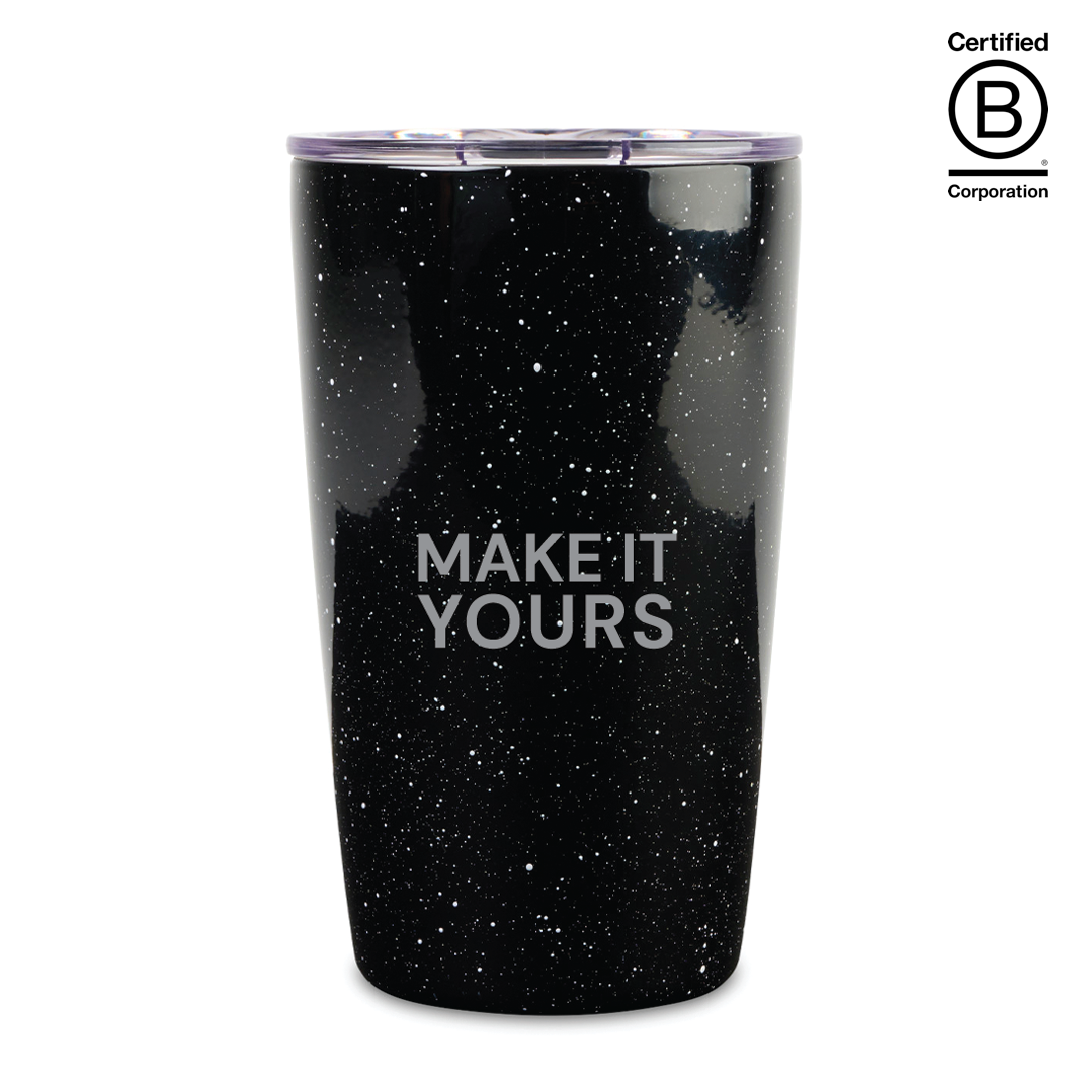
Drinkware is a daily-use staple, but only when it performs. A tumbler that leaks or sweats gets left in the cupboard. The MiiR® Comfort Vacuum Insulated Tumbler 12 oz is shaped like a classic paper coffee cup, so it feels familiar in hand and fits most car cupholders.
Double-wall vacuum insulation keeps drinks at temperature, the exterior stays sweat-free and cool to the touch, and the 18/8 stainless steel helps prevent flavor transfer. For understated branding, laser engraving on the back panel creates a crisp, permanent mark on the powder-coated finish in black, black speckle, or white. Each tumbler carries a small standard MiiR® logo that can’t be removed. MiiR is a Certified B Corporation, and this tumbler qualifies for Swift Swag rush production when timelines are tight.
Desk Essentials: Rocketbook Elite Notebook Set
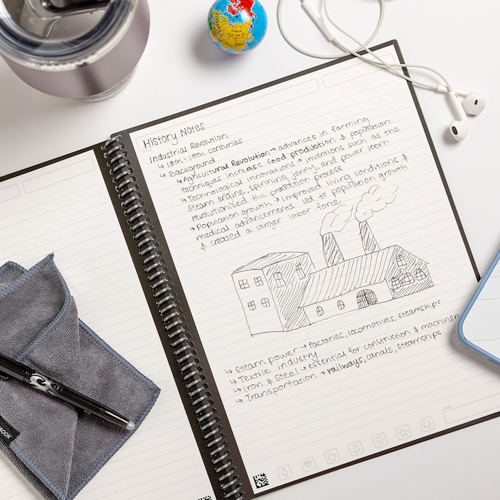
Paper notebooks are a classic onboarding item, yet many get filled halfway and forgotten. A reusable smart notebook changes that because it keeps being useful long after a traditional notebook would be full. The Rocketbook Elite Notebook Set gives employees 36 lined reusable pages, lets them scan and upload notes to Google Drive, Dropbox, OneNote, and other cloud platforms, and wipes clean with a damp cloth so the pages can be used again.
That workflow fits meetings and hybrid work, which is why it tends to stay on desks. The set includes a Pilot FriXion erasable pen, a microfiber cloth, and a retail gift box, so it arrives ready to use. It’s made in the USA with a cover made from recycled PET, and the brand is a 1% for the Planet member. A one-color silk screen on the front cover in black, navy, or white keeps the design clean, and the set also qualifies for Swift Swag.
Focus Tech: TranquilTone Active Noise Cancellation Wireless Headphones
Headphones are one of the few branded items employees use for hours at a time, whether they’re tuning out an open-plan office, taking calls from home, or unwinding on a flight. The TranquilTone Active Noise Cancellation Wireless Headphones offer up to 15 hours of playback, or about 10 hours with noise cancellation on, which makes them a practical tool for focused work and travel alike. They also made our roundup of travel accessories worth putting in your swag program for exactly that reason.
The branding options suit a subtle approach: a 1.25-inch diameter pad print centered on one or both earpieces. A small, single-color mark on the ear cup looks intentional rather than promotional, which matters for an item people wear in public. The manufacturer has been audited for social and environmental criteria.

Desk Tech: Made in Canada Magnetic Wireless Charging Stand
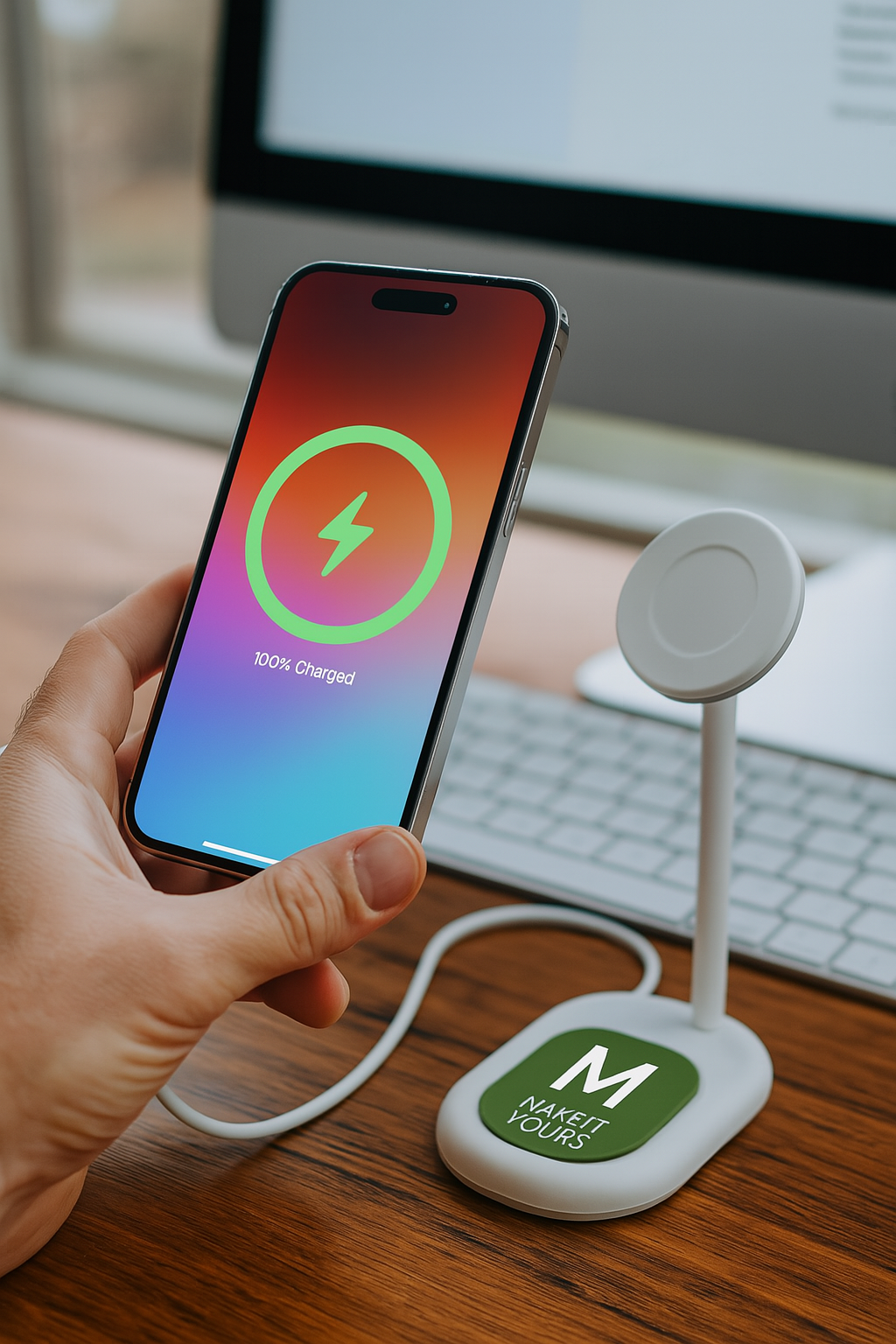
A phone charger earns its place by solving a problem people run into every day. The Made in Canada Magnetic Wireless Charging Stand offers MagSafe® compatible wireless charging up to 10W, a magnetic surface that lines the phone up automatically, and an adjustable tilt for portrait or landscape viewing during video calls. Its foldable design moves easily between the office and home, and an included adhesive metal ring makes it work with phones that aren’t MagSafe® compatible.
The decoration area sits on the base of the stand, so your logo stays visible on the desk without competing with the phone. It’s made in Canada, and through One Tree Planted, a tree is planted for every order placed.
A Quick Usability Checklist Before You Order
Run every shortlisted item through these questions:
Would someone buy this for themselves if it had no logo?
Does it fit a routine your team already has, such as commuting, meetings, calls, or travel?
Is the logo sized and placed so the item still looks good in public?
Will the decoration method hold up to washing, handling, and daily wear?
Are the colors neutral enough to suit most wardrobes and workspaces?
Have you reviewed a virtual proof or tested a sample before committing to bulk?
Can employees choose their own sizes, colors, or items?
An item that passes most of these has a strong chance of being used rather than stored.
How Ethical Swag Helps Teams Deliver Items People Keep
Designing useful branded items is only half the job. Getting them to the right person at the right moment matters just as much. Ethical Swag runs warehousing in both Toronto and Salt Lake City, so teams with employees across Canada and the US can store inventory closer to recipients and simplify cross-border fulfillment, with payment in either USD or CAD.
Real-time inventory dashboards show exactly what’s on the shelf, which helps HR and people teams send items when an employee starts, reaches a milestone, or joins a new project rather than all at once. Our warehousing and fulfillment services also include kitting, so a cap, tumbler, and notebook can arrive together as one welcome package. (If you’re building one, here’s what should be in a new hire welcome kit.) For teams that want employees to pick their own items, sizes, and colors, company stores and pop-up shops put the choice in their hands, which is one of the most reliable ways to make sure every piece goes to someone who wants it.
Frequently Asked Questions
Why do employees throw away company swag?
Employees usually toss company swag because it doesn’t fit into their daily life. Common reasons include novelty items that solve no real problem, oversized logos that make an item awkward to use in public, low-quality materials that break or fade quickly, and colors that clash with personal style. Usefulness is the biggest factor: in ASI’s 2026 research, 78% of U.S. consumers said they’d keep a promo item because it’s useful.
How big should a logo be on branded items for employees?
For items employees wear or carry in public, a small and deliberately placed logo usually works best. On caps, front-panel embroidery or a compact patch keeps the look clean. On drinkware, a back-panel engraving is often enough. The right size depends on each product’s imprint area, so ask your supplier for a virtual proof to see exactly how the logo sits before approving production.
Which decoration methods look the most subtle?
Laser engraving, tonal embroidery, and suede-look or leather-look patches are among the most subtle decoration methods. Laser engraving creates a permanent, tone-on-tone mark on stainless steel. Tonal embroidery uses thread close to the fabric color for texture without strong contrast. Patches add a retail-style finish to headwear. Single-color pad printing in a muted shade also works well on small surfaces such as headphone ear cups.
What branded items do employees use most often?
Employees tend to use branded items that fit routines they already have: drinkware for commuting and desk work, headwear for weekends and time outdoors, notebooks for meetings, and tech accessories such as headphones and phone chargers for focused and hybrid work. The shared factor is daily usefulness. When an item solves a problem people face every day, it stays in rotation.
How can we find out which branded items our team will actually want?
The simplest approach is to ask. A short survey about work style, commute, and preferred colors gives clear direction before you order. Ordering samples lets a small group test products first. For larger or distributed teams, a company store lets employees choose their own items and sizes, so every piece goes to someone who wants it and budget isn’t spent on unpopular options.
How long does it take to produce custom branded items?
Standard production with Ethical Swag takes 15 business days, covering both production and delivery, starting from the date of payment. When timelines are tight, Swift Swag rush service delivers eligible products in 10 business days, also covering production and delivery from the date of payment. Build in extra time for artwork approval and sampling, especially for new hire programs or events with fixed dates.
Ready to Create Branded Items Your Team Will Actually Use?
Tell us about your team, your timeline, and the daily routines you want to support. We’ll help you shortlist useful products, choose subtle decoration methods, and plan fulfillment across Canada and the US.