


Ordering branded promotional items, sometimes called swag, for a student club or campus organization does not require a procurement department or a five-figure budget. This guide walks student clubs, orientation teams, residence life staff, and volunteer organizers through how to plan, budget, and order back-to-school merchandise, including which items students actually keep, how far in advance to order, and how to ship to multiple campuses without the process becoming a second job.
If you are reading this in July or August, you already know the feeling. Orientation Week is coming, your club's recruitment fair table needs something to hand out, and someone just asked whether you can get 75 water bottles to three different campuses before classes start. You are probably not part of a university purchasing department. You are a student leader, a volunteer organizer, a residence life coordinator, or a faculty department assistant handed this task on top of everything else you are already doing.
This guide is written for exactly that situation. It skips the corporate procurement language and focuses on what actually matters when you are ordering customized promotional items, also known as company swag, on a modest club or department budget.
How Do Student Clubs Order Branded Merchandise?
Most student clubs and campus associations order branded promotional items the same way any small organization does: by figuring out the occasion, the headcount, the budget, and the timeline, then working with a supplier who can handle a smaller order without treating it as an afterthought.
The part that trips people up is not the ordering itself, it is not knowing what to ask for. A few basics make the process much smoother:
• Know your rough headcount before you request a quote. You do not need an exact number, but "40 to 60 people" gets you a far more useful quote than "not sure yet."• Decide whether this is a one-time event order or something you will likely repeat every semester, since that affects whether it is worth setting up a standing account.
• Have someone designated as the point of contact for the order, even if that person is a volunteer who only does this once a year. Suppliers who work with campus groups regularly are used to this and can guide first-time organizers through the process.
• Ask about minimum order quantities up front. Many suppliers assume large institutional orders by default, so it is worth confirming that smaller runs, in the 40 to 200 unit range, are genuinely welcome rather than tolerated.
What Are the Best Swag Items for Orientation Week?
Orientation Week giveaways work best when they solve a problem a new student actually has in their first week on campus, rather than just displaying a logo. A few categories consistently perform well because students use them immediately and keep them past the first semester.
Reusable water bottles and tumblers are a strong Orientation Week pick because move-in day and the first week of classes are physically demanding, and a bottle a student can refill between buildings gets used constantly rather than tossed in a drawer.
Tote bags and drawstring bags solve a real logistical problem during welcome events, since new students are often collecting handouts, folders, and freebies from a dozen tables at once and need something to carry it all in.
Lanyards and card holders are practical for students who are juggling a new student ID, dorm key or fob, and possibly a transit pass for the first time, which makes them genuinely useful rather than purely promotional.
Notebooks and pens remain reliable for orientation sessions and info nights where students are actively taking notes, particularly for graduate student orientations and academic department welcome events.
How Much Should a Student Organization Budget for Swag?
Realistically, most student clubs and campus associations work with a per-event budget somewhere in the low hundreds to low thousands of dollars, not a line item with institutional backing, and that budget usually needs to stretch across a full semester of events.
A workable approach is to prioritize spend around the events where swag does the most work: Orientation Week, your recruitment fair table, and any conference or off-campus event representing your organization to people outside your usual circle. Smaller internal events generally do not need the same investment.
It also helps to separate "quantity" items from "quality" items. Cheaper, higher-quantity items like pins or stickers make sense for large-scale handouts where volume matters more than longevity. Fewer, better items make more sense for volunteer appreciation or leadership retreats.
Can Promotional Products Be Shipped to Multiple Campuses?
Yes, and this matters more than people expect once an organization operates across more than one location. Regional and national student organizations, graduate associations with satellite programs, and off-campus groups serving multiple universities often need one order split and shipped to several different addresses rather than a single bulk shipment to one office.
This is one of the areas where a smaller supplier without warehousing flexibility can create real headaches, since it forces a volunteer organizer to personally collect and redistribute boxes to each campus by hand. Working with a supplier that offers pick-and-pack fulfillment and warehousing in both Canada and the U.S. means an organization with chapters in Toronto, Vancouver, and Boston can place a single order and have it delivered directly to each location.
For organizations managing orders across both countries, working with a supplier that supports payment in both U.S. and Canadian dollars removes one more detail a first-time volunteer organizer should not have to figure out alone.
What Sustainable Swag Do Students Actually Use?
Students are generally receptive to sustainable merchandise, but the honest answer is that they keep and use items that are useful first and sustainable second. A recycled-content item that is well made gets used all year, while a "sustainable" item that is flimsy or impractical ends up in the back of a closet no matter what it is made from.
That is why product selection matters more than the sustainability label alone. When Ethical Swag makes recommendations for campus organizations, we evaluate items against a Good, Better, Best framework: Good-tier items are cost-competitive and sourced from suppliers who have passed third-party audits on social compliance and environmental impact. Better-tier items add recycled content, rapidly renewed materials, or biodegradable properties. Best-tier items go further, prioritizing sourcing as close to North American made as possible along with preferred sustainable materials and third-party accreditation. You can see the full breakdown in our Good, Better, Best sourcing guide, and the tiering for each product recommended below.
How Long Does It Take to Order University Merchandise?
Standard production and delivery for customized promotional items typically runs 15 business days from the date of payment, so an order placed the week before classes start is cutting it to close! Rush orders (Swift Swag) is an option but never recommended so start early on product selection and have your logo ready in vector format.
For organizations that got a late start, a rush production option can complete production and delivery in as little as 10 business days from payment. It is important to confirm shipping and delivery logistics at the time you place the order.
For more details on how to plan your event or with choosing swag suitable for your needs, take a look at our 2026 Event Planning Guide and our Educational Industry Guide.
Six Products That Work Across Your Campus Calendar
Rather than browsing a general product catalogue, it is usually faster to start from the specific moment you are planning for and work backward to the item. These six picks are organized by purpose, not category, and together cover the situations campus organizations run into most often between move-in day and finals.
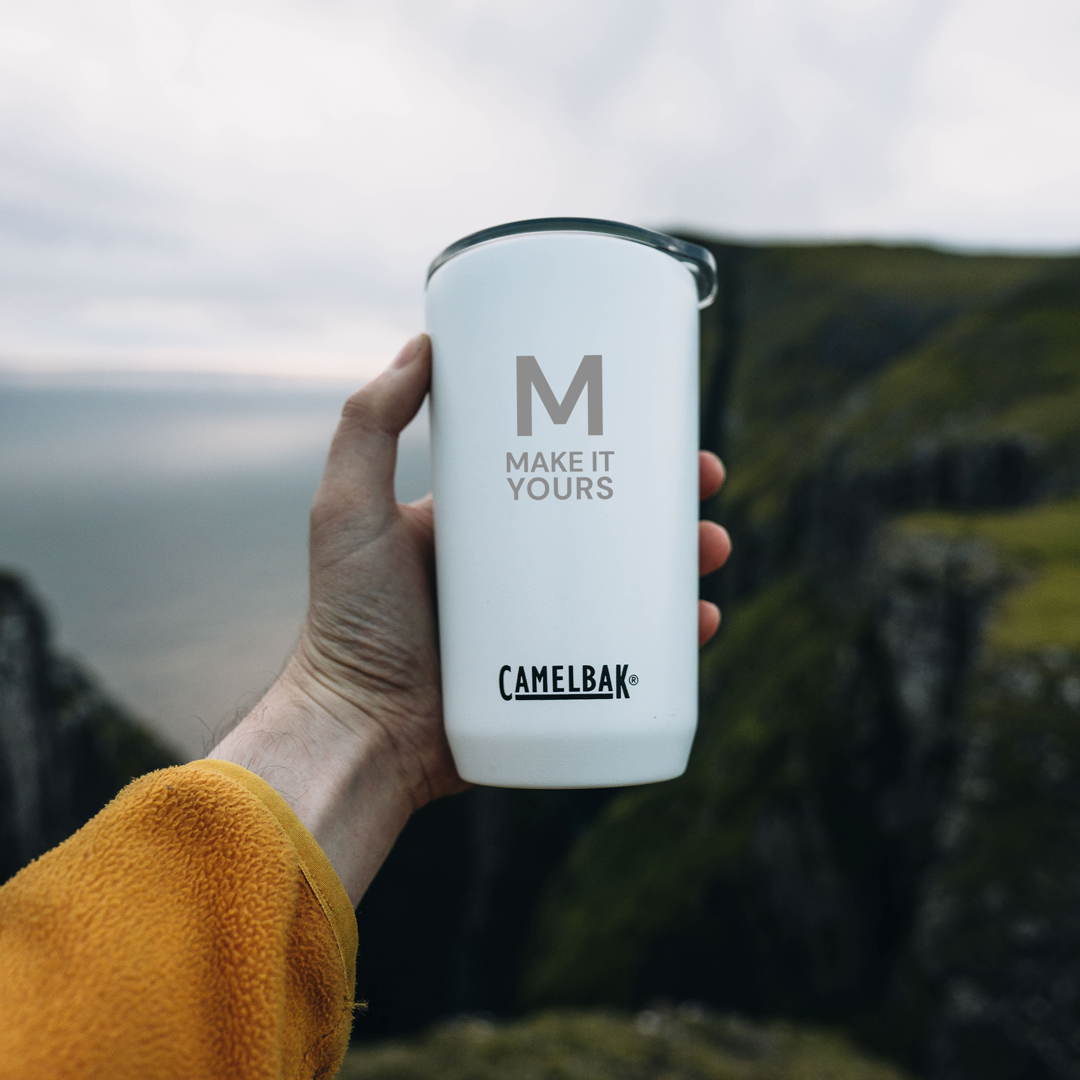
CamelBak Adventurer Insulated Stainless Steel 16 oz Tumbler, for Orientation Week and Residence Life. New students spend Orientation Week moving between sessions and buildings with little downtime, and residence life staff are welcoming a full building of new residents into a space they will live in for months. A tumbler a student can refill between stops gets picked up every day rather than left in a box. This one has a copper vacuum-insulated stainless steel wall, a condensation-resistant powder-coat finish, and a non-slip base that keeps it steady on a dorm desk. It falls in our Better tier and also qualifies for rush production, useful if your order comes together later than planned.
Fully Custom Dreams Notebook and Pen Set, for Welcome Kits. A welcome kit's job is to make a new member or resident feel prepared, not just handed a logo. This set bundles a fully customizable notebook with a gel pen and reusable clip penholder in gift box packaging, so a new student gets one cohesive item instead of loose freebies. The notebook itself is made in Canada using FSC-certified paper, while the pen and clip are sourced from China. It sits in our Best tier and includes a One Tree Planted contribution with every order.

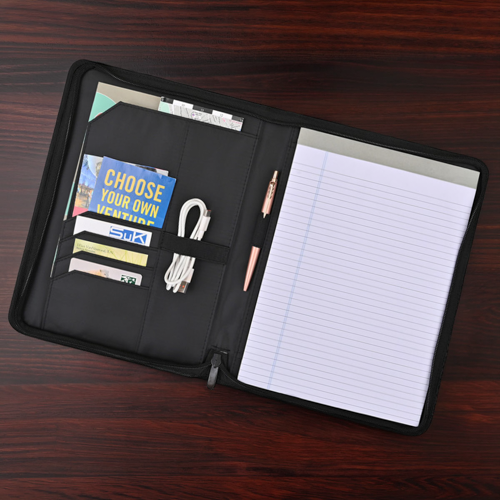
Heathered Executive Zippered Padfolio, for Conferences. Conference attendees are often faculty, alumni, or student representatives presenting their organization to people outside their usual circle, so the item needs to read as polished rather than promotional. This padfolio is made from vegan leather with Global Recycling Standard certified recycled content and a PVC-free construction, includes an FSC-certified paper pad, and has card and ID pockets with a zippered closure. It is made by a Certified B Corp supplier and sits in our Best tier.
Custom Soft Enamel Lapel Pin 1.25", for Club Recruitment Fairs. A recruitment fair table has seconds to make an impression before a student moves to the next booth. This die-struck zinc pin with soft enamel color fill is individually polybagged and has a minimum order of just 50 units, realistic for a single club table rather than a large institutional order. It falls in our Good tier and works well as a low-cost item students are happy to grab on the spot.

Recycled Lanyard with Bulldog Clip 3/4", for Campus Ambassadors. Campus ambassadors are walking, visible representatives of your organization every day, and a lanyard is something they are already likely wearing for an ID or access badge. This one is made in the United States from reground materials such as factory scraps and recycled water bottles, and includes a safety breakaway attachment. It falls in our Good tier and gives ambassadors a piece of required daily equipment that carries your branding at no extra effort on their part.

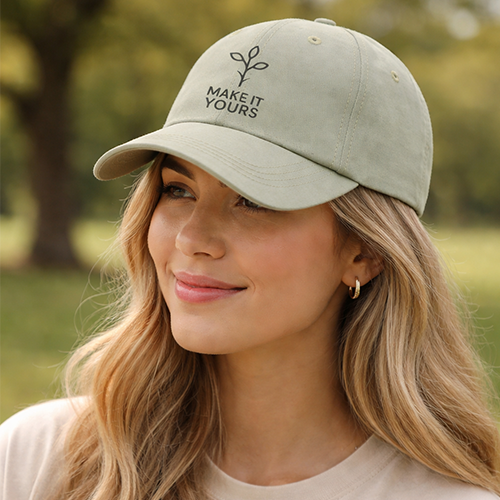
Lightweight Recycled Polyester Active Cap, for Volunteer Appreciation and Student Leadership Retreats. Volunteers and student leaders are a small, known group who put in disproportionate hours, so a mass-giveaway item undersells the gesture. This cap is made entirely from post-consumer recycled polyester with a moisture-wicking, low-profile design and an adjustable strap, genuinely useful for an outdoor retreat or appreciation event rather than something set on a shelf. It falls in our Good tier and is embroidery-customizable.
Common Mistakes Student Organizations Make When Ordering Swag
Ordering too close to the event date is the most common issue, particularly for volunteer organizers managing this alongside classes or a full-time role.
Ordering one giant batch of a single item is another frequent misstep. A closet full of leftover items from three years ago is a sign the original order did not match actual attendance or ongoing needs.
Assuming a supplier will not work with a small order often stops organizers from asking in the first place. Many suppliers, including Ethical Swag, support order quantities well under 200 units, since campus organizations and small clubs are a regular part of the business.
Not asking about multi-campus shipping until after the order is placed can turn a straightforward order into a logistical scramble. Raise it at the quote stage if your organization has members at more than one school.
How Ethical Swag Supports Student and Campus Organizations
Ethical Swag is a certified Women Business Enterprise and Certified B Corp, and that ownership structure shapes how we work with smaller, volunteer-run organizations rather than only larger institutional accounts. Student clubs, graduate associations, and campus groups often do not have a dedicated purchasing office, and our order process is built to accommodate that directly, including support for smaller quantities, first-time organizers, and orders reaching more than one campus. Whether your organization orders once a year for Orientation Week or several times a semester across multiple chapters, the goal is to make the process straightforward enough that a volunteer coordinator with limited time can manage it confidently.
Frequently Asked Questions
How do student clubs order branded merchandise?
Student clubs order branded promotional items by identifying their headcount, budget, and event date, then requesting a quote from a supplier that works with smaller order quantities. Most campus organizations do not need a purchasing department to do this, just a rough headcount and a point of contact for the order.
What are the best swag items for Orientation Week?
Reusable water bottles, tote or drawstring bags, lanyards, and notebooks consistently perform best for Orientation Week because they solve a practical problem during the first week on campus, which makes students likely to keep and use them well past orientation.
How much should a student organization budget for swag?
Most student organizations work with a modest per-event budget in the low hundreds to low thousands of dollars, and it generally makes sense to prioritize spending on higher-visibility events like Orientation Week and recruitment fairs over smaller internal meetings.
Can promotional products be shipped to multiple campuses?
Yes, suppliers with warehousing and pick-and-pack fulfillment in both Canada and the U.S. can split a single order and ship directly to multiple campus locations, which is especially useful for regional or national student organizations with chapters at more than one school.
What sustainable swag do students actually use?
Students use sustainable merchandise most when it is genuinely practical first, such as a well-made recycled-content tote or bottle, since a sustainable item that is low quality or impractical typically goes unused regardless of its materials.
How long does it take to order university merchandise?
Standard production and delivery for customized promotional items typically takes 15 business days from the date of payment, with a rush option available in as little as 10 business days for organizations that are ordering closer to their event date.
Planning swag for Orientation Week or a campus event this fall?
Contact us to talk through your headcount, budget, and timeline, no purchasing department required. Visit ethicalswag.com or book a free swag project discovery call with us!